
A conversation with Stephen Malkmus and Scott Kannberg of Pavement from 2015
As the '90s indie-rock icons release a new greatest-hits collection today, let's revisit their previous attempt to quarantine their past with the ill-fated Secret History vinyl series

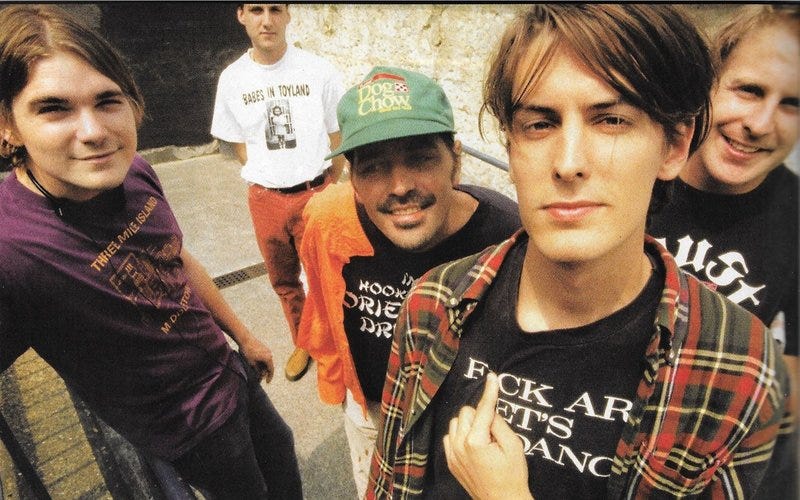
Welcome to stübermania, where I dig into my box of dust-covered interview cassettes from the 1990s and 2000s (and crusty mp3 files from the 2010s) to present bygone conversations with your favourite alterna/indie semi-stars and the occasional classic-rock icon.
This is a newsletter in three parts: The Openers (links to recent writings, playlist updates, and/or other musical musings), The Headliner (your featured interview of the week), and Encores (random yet related links).
This is a free newsletter, but if you really like what you see, please consider a donation via paid subscription, or visit my PWYC tip jar!
THE OPENERS
Through no strategic planning on my part, the past two stübermania newsletters have just happened to feature post-Y2K Montreal bands in the Headliner slots, so I figured I’d complete the ‘03 Plateau flashback by going to Mills Hardware last Friday to see The Besnard Lakes—whose unerring consistency is reflected by the fact singer/guitarist Jace Lacek has been wearing the exact same Western shirt/sunglasses combo for the better part of 20 years. The Besnards were promoting the latest fine addition to their cosmic canon, The Besnard Lakes Are the Ghost Nation, but they closed the set with my favourite song from my favourite album of theirs, “And You Lied to Me,” whose dramatic guitar-solo finale makes it the “Comfortably Numb” of mid-2000s Montreal indie space-rock jams:
In honour of Neil Young’s 80th birthday this week, I made this playlist of 80 Neil classics, ranked in rough order from my all-time favourites to most-of-the-time favourites. It could’ve probably gone on for another 80, so hopefully Neil lives to 160 and I’ll have occasion to put an updated playlist together in 2105. (In related news: Stereogum surveyed 80 artists—from Michael Stipe to Water From Your Eyes—for their personal Neil picks, and, as a testament to the depth of his catalogue, their list includes only nine songs from my personal top 20.)
This past Monday marked the 50th anniversary of the Edmund Fitzgerald sinking in Lake Superior, a disaster that claimed the lives of 29 crewmen and inspired Gordon Lightfoot to write one of the greatest Canadian folk-rock songs of all time. Last weekend in the Toronto Star, I spoke to two members of Gord’s band—drummer Barry Keane and bassist Rick Haynes—about how that song came to be, and how the recording we know so well actually captures their very first time playing the song.
This week at Commotion, I produced this episode about freelance artists and photographers who’ve had their work appropriated by large organizations without permission and what they did about it. The featured guests include Montreal-based illustrator Raymond Biesinger, author of the great new (self-explanatory) book 9 Times My Work Has Been Ripped Off, and Jackie Dives, a Vancouver photographer who recently took legal action against Macleans magazine for reasons outlined here.
Notes on this week’s additions to the stübermania 2025 jukebox:
La Peste, “I Don’t Know Right From Wrong”: These Boston punk pioneers lasted just long enough to officially release one perfectly petulant single, but they left behind at least 21 other discarded tracks that will surface on the upcoming Wharf Cat compilation I Don’t Know Right From Wrong: Lost La Peste 1976-1979 (out April 17). The set features the scrapped sessions they recorded with producer Ric Ocasek, including this title track, whose synth-fueled menace suggests the band could’ve undergone a Wire-like evolution into art-punk futurists.
Austra, “Fallen Cloud”: Katie Stelmanis was summoning the spirit of Kate Bush back when the Stranger Things kids were still in elementary school, and her first Austra record in five years, Chin Up Buttercup (out today), reinstates her as the queen of operatic electro mysticism. The album peaks with this techno-powered thumper, which hits that magical sweet spot between heart-pumping intensity and out-of-body transcendence.
Odonis Odonis, “Work It Out”: Speaking of underappreciated gothy Toronto acts spawned at the dawn of the 2010s… this industrialized duo have just dropped their self-titled sixth album, which sees them shifting away from strobe-lit EBM aggression and reverting to their guitar-oriented post-punk roots, most forcefully on this rant-rock rallying cry for a lost generation saddled with debt and drowning in disinformation.
Guided by Voices, “The Lighthouse Resurrection”: Keeping up with Robert Pollard remains a pursuit for only the most dedicated of heads, but GBV’s recently released second album of 2025—the amplified-to-rock Thick Rick and Delicious—has proven to be their most replayable set in many moons. And tucked deep into the record is this Easter egg to reward the faithful: “The Lighthouse Resurrection” is actually a fuzz-rock makeover of the old King Shit and the Golden Boys oddity “At Odds With Dr. Genesis” (which casual GBV fans would recognize from the “skintight bufoonery” snippet that precedes “Ester’s Day” on Bee Thousand).
Good Flying Birds, “Fall Away”: Speaking of GBV… this Indianapolis indie-rock outfit may take its name from an Alien Lanes deep cut, but on this standout from the recently released Talulah’s Tape, they hitch themselves to the careening, smash‘n’ grab jangle of My Bloody Valentine circa “Thorn” or Dinosaur Jr. circa “In a Jar.”
THE HEADLINER:
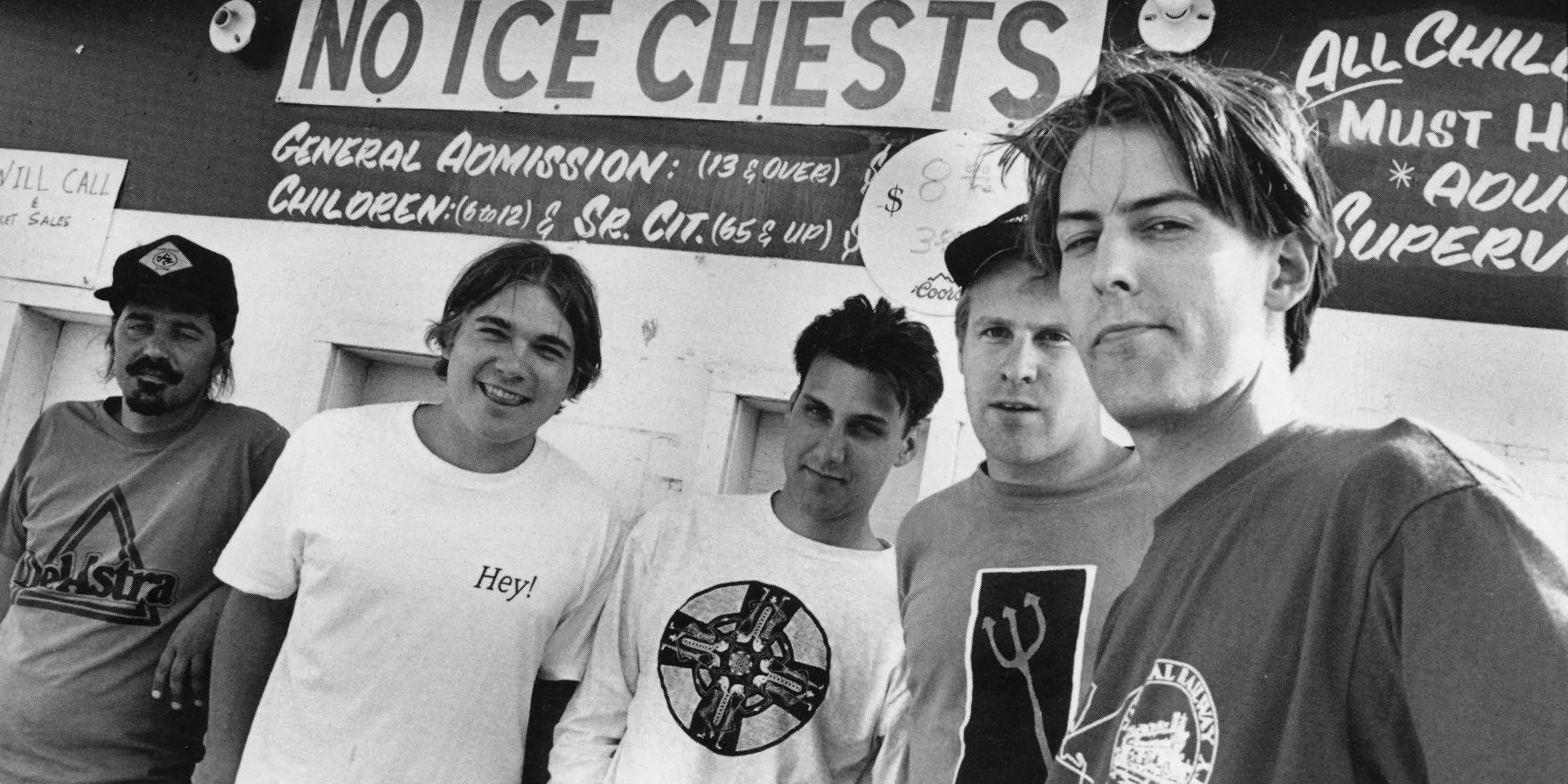
A conversation with Stephen Malkmus and Scott Kannberg
The date: June 15, 2015
Publication: Pitchfork
Location: Stephen was in Portland; Scott was in L.A.; I was sneaking these phoners in during my lunch hour at a Toronto magazine where I was doing a contract editing gig at the time.
Album being promoted: Pavement’s The Secret History, Vol. 1
The context: When I wrote my oral-history feature on Pavement’s Terror Twilight for Pitchfork in 2022, I began by noting the similar career contours of Pavement and The Beatles, to set up the premise that the Terror Twilight: Farewell Horizontal box set was like Pavement’s version of Get Back—i.e., a long overdue reassessment of a troubled final record. (The band’s social-media accounts responded in kind.) And if you can humour me as I stretch the comparison one more time, then today’s release of Hecklers Choice: Big Gums and Heavy Lifters is essentially Pavement’s Beatles’ 1 moment—i.e., a streamlined, single-disc distillation of an idiosyncratic discography. (And just as 1’s all-hits focus excluded any tracks from the White Album, this new compilation skips over any tracks from Pavement’s own White Album—1995’s Wowee Zowee—to foreground the most accessible songs in their repertoire.) Of course, Hecklers Choice essentially exists to grandfather the surprise viral sensation “Harness Your Hopes” into the group’s official greatest-hits canon (after it was excluded from previous Pavement compilation, 2010’s Quarantine the Past), and encourage the TikTok kids to get better acquainted with the Pavement songs that were actually promoted as singles back in the ‘90s.
The interviews with founding members Stephen Malkmus and Scott “Spiral Stairs” Kannberg reprinted below are only 10 years old, but they belong to an entirely different era of Pavement history. After embarking on a successful reunion tour in 2010, Pavement were once again a dead band by 2015: “Harness Your Hopes” was still languishing in obscurity as a Brighten the Corners outtake, and there was no indication that the group would tour again (let alone star in their own movie). The one sign of life in this fallow period was the announcement of a new archival series called The Secret History, which was essentially a savvy way of reissuing the band’s previous reissues.
Over the course of the 2000s, all of Pavement’s albums (save for Terror Twilight) received deluxe CD editions that included reams of bonus material, but with CDs all but obsolete in 2015, The Secret History series would bring all those extra tracks to vinyl for the first time, reorganizing the rarities into “lost” albums that would form a shadow discography to complement the band’s official one. The first volume included the slew of outtakes and Peel Session recordings that came out of the Slanted and Enchanted era, as well as a widely bootlegged 1992 live set recorded at London’s Brixton Academy.
Prior to the collection’s release, I did back-to-back phoners with Malkmus and Kannberg. (A condensed version of these conversations ran in Pitchfork). First up was Malkmus, who, at this point, was so checked out of Pavement business, he wasn’t even sure of what was included on the album.
THE STEPHEN MALKMUS INTERVIEW
Are you home in Portland today?
Ummmm…. Yeah.
It took you a moment to answer that question.
SM: Yeah, well… the summer feels like one long day.
I know you’re playing that 4Knots festival with the Super Furry Animals, but otherwise it seems like a pretty light schedule for you and the Jicks right now…
SM: Yeah, we’re laying pretty low. There’s just a couple of gigs in the summer, and then… I don’t really know what’s going on. We’re working on stuff.
Do you actually take full breaks between records and not think about music at all?
SM: For my own fucking-around-in-the-basement stuff, I don’t really stop ever. I take days off, but I guess I’m always trying to come up with new stuff. It’s just sort of natural, it doesn’t feel like work for me. Some stuff is work—getting things more focused and maybe writing some lyrics and really battening down the hatches. But I always stay pretty active.
I guess this would qualify as work: doing phoners to promote reissues of reissues of Pavement records.
SM: I know, it’s ridiculous, right?
Well, it seemed like in 2010, there was a real finality to the Pavement story: you had done the CD reissues, you got your double-album retrospective, you did the reunion tour. And yet here we are in 2015, still talking about new Pavement product. Whose idea was it to go back and repackage these odds and sods?
SM: That’s a good question. It definitely was not my idea. It was probably Scott and maybe Matador? Scott lives in L.A. now and so does Chris [Lombardi] from Matador. Maybe it was their idea. As far as I knew, there was maybe going to be a reissue for Terror Twilight, the accidental child. That still hasn’t been re-celebrated as a masterpiece [laughs]. I thought that was next, but evidently there’s the mystery album—the album that could’ve been between Slanted and Enchanted and Crooked Rain. A crucial time.
Was that stuff ever envisioned as a record?
SM: No way. They’re just B-sides. Did they include Watery Domestic in it?
No, it’s mostly the Peel Sessions and leftover tracks from the Slanted era.
SM: Yeah, that’s just fuck-around shit, off-the-top-of-the-head stuff and B-sides. The B-sides from Slanted could’ve been on the album easily—they were not made to be B-sides. The whole album was all just one big B-side in a way, and that stuff’s equal to the album. And those Peel Sessions—we were just working a lot and travelling and, of course, if John Peel wants to do something, you do it. A lot of the reason Pavement was popular was because of John Peel. You don’t realize that when you’re young, and you’re kind of surprised there’s a lot of people at your gig—you just think it’s hype in general, like British press hype. There was still Melody Maker and Everett True—he was the Nirvana guy, and he liked us. But I realize in retrospect that Peel was playing us and saying, “this is a great band,” so everyone loved him and listened to him, and if he liked you, you could get 300 people at your gig. In those early times, that space from being a nobody to something is so vast, and then after that, you’re just kind of there—it’s up to you to carry on the fight and have something to say.
But still, to get your foot in the door, he was massive. We didn’t take those Peel Sessions seriously, I guess, because we didn’t really realize it was that special an opportunity. We just thought, “Oh, this is what young bands do, and we’re just going to fuck around in here and make new material.” We did a couple of songs that were already extant, but I just took it as a chance to experiment with some new ideas, and also not be particularly precious about the way they sounded. Because the way they would record that stuff, I would be just like, that’s not howI I would do it. I mean, I loved the engineer that did it, but that’s not how I would record things. Even though it was just a day, he’d just say, “okay, it’s going to be kind of big and compressed and of-the-era sounding.” And we thought, “okay, that’s how they like it, we’ll just do that.”
Are there any songs where you were like “damn, we should’ve released that properly” as opposed to consigning it to the B-side purgatory bin.
SM: To me, I can use the standard thing that probably Scott would say: “I liked these bands in the ‘80s, and their weird songs or their extra songs—that was part of being a fan.” I’d find these obscure songs, like an R.E.M. B-side—that was like the secret history of the band. I’m a real fan, so I really like that stuff just as much, and I’m willing to go find it, and that builds the mystery and my fandom in that equally. I think that’s why I was like, “let’s leave that and move onto the next moment.” There were plenty of times back then, surprisingly, where we tried to record songs… like, “Grounded” is a song that people love, and we did that on Crooked Rain and I thought it was good, but then I’d listen to it five times and I just wasn’t feeling it. I was like “that could be better.” So we did redo certain songs.
“The Hexx” was supposed to be on Brighten the Corners, right?
SM: Yeah, that was redone, only because I kept hearing some kind of cymbal hiss in the original one—just from over-listening—that no one would notice. I probably could’ve mastered it out, but that was just driving me crazy. It was really the only reason we did it again. It was just something my dog ears were hearing stupidly. But most of those [1992-era] songs, I just had a couple of days when we were on tour, and those were some ideas we had. And also, they were a little different because they were full-band recordings—on those [Peel] Sessions things, all the band is playing on them, whereas on the records—even Slanted and Enchanted—a lot of the songs and overdubs were just me and [drummer] Gary [Young], and Crooked Rain was a lot of just me and Steve [West], the second drummer. So [the Peel Sessions] were cool—we were trying to get our footing with Mark and Scott and Bob and become a live band, which we weren’t, even touring Slanted and Enchanted. We were finding our live sound, and what that would be.
This first Secret History volume features the Brixton show, which has been bootlegged many times and included on the first Slanted reissue. That show feels like an important moment in early Pavemania. There’s a real electricity to that recording.
SM: That was toward the end of a tour with Sonic Youth, who were touring Dirty, and they kind of had the red carpet rolled out for them at that time—like next-Nirvana hype. They were playing big places, and they were definitely a priority for their label, and justifiably so, because they were great. They had a big, big sound that could definitely carry the places they were playing. So it was a big tour, and we were a little band on that tour. And we were trying really hard, too—we wanted to impress them. It was kind of fun, because you’d just go on for 40 minutes before them and just play. But I know there were a lot of good shows on that tour, probably even better ones than Brixton, which is a big venue. There were some other ones we played in like Finland, or some of the German ones were weird… anyway, I know there were a lot of good shows that we did on that tour and I wish they were taped.
Even though you guys were opening for Sonic Youth, the crowd is really amped up to see you.
SM: Yeah, man. In England, people really knew who we were already. We weren’t equal to Sonic Youth, but we had played a lot in England when we started, through John Peel and through our label, Big Cat—they had made us a priority, and we were really busy. We were hyped! I remember that. I don’t have hype anymore, but I remember what that was like! [laughs] It feels good, but it makes you nervous. You’re like, “wow, we’re hyped, we’re big, it’s going to go on forever!”
Did you ever collect your own bootlegs or keep track of what was floating out there throughout the ‘90s?
SM: No. At one point, towards the end of the band, there’s a record store in Athens, Georgia, and it was like a CD-bootleg nirvana little record store—it was near the 40 Watt Club, and I got a bunch of them toward the end. Not only my own, but like Beatles ones. At that time, CDs were still novel, almost… I’m sure internet bootleg stuff is even huger, but I don’t do that really. I see people doing it, saying, “I’ve got this SendSpace blah blah blah.” I haven’t done that, I’ve never downloaded a Pavement thing from that. But back then, I got a few of them, and I was into other ones, like Beatles ones that he had—I got, like, 40 Beatles ones: White Album demos, there were Magical Mystery Tour outtakes, interviews… Those are fun to listen to when you’re on tour, when you would actually take the time to put a CD in your car stereo instead of listening to your iPods.
This “lost album” presentation is consistent with Pavement tradition. A lot of the early EPs had fake compilation titles, and the Watery Domestic artwork was scrawled over an existing album. Even though a cynic might say this is just repackaging stuff that’s already out there, this presentation works with the band’s history.
SM: I hope so [laughs]. I haven’t heard it yet, I’ve just read what they’re doing. Really, you’ve got to think Jesper [Eklow] and some of the old-school Matador people want to make this a special part of not only Pavement but Matador’s legacy. They’ve put the effort in to keep it in a certain style—a style they know as fans as much as I do for sure, or Scott, who I imagine is the only one who has anything to do with this. I’m not even sure if any of the other guys have anything to do with it, because in a way, it’s pre-Bob/Mark/Steve, in terms of its provenance, even though they’re on it. But I would give the credit or damning cynicism to Matador. [laughs] But I personally think they do a great job. This reissue world is getting tight. Everything’s been reissued. All the good psychedelic albums are pretty much dried up, so there’s not really huge money in it. You’re just making 2,000 lovingly made Relatively Clean Rivers albums—you can’t make money off it, really. It’s out of love, these reissue labels. So now we’re seeing some ‘90s records getting reissued with the same care as those old records.
Like, this band No. 2 from Portland that my friend Neil [Gust] was in—he was an Elliott Smith friend and he was in Heatmiser, that band Elliott was in, and then he had this band No. 2 in the ‘90s who I thought were pretty good, but there were a lot of bands who put out their albums. But recently Jackpot, this label and record store here, has reissued it, and it sounds great, but it’s like a mid-’90s indie rock record. Listening to it now, I see why they reissued it, because it didn’t get what it deserved the first time, and it almost sounds more now to me in its reissue form. But we’re at a point now where these [‘90s] records are like psychedelic records. If you really decide that you’re going to start reissuing indie rock records from the ‘90s, I mean, there’s a lot. [laughs] There are so many obscure bands. Whereas in the ‘60s, it seems like every one of them was good, supposedly. I don’t know if that’s going to happen with indie rock, but it’s there. Some of my friends work at a Mexican Summer-related reissue label and they want to do stuff but they’re just like, “what can we do that’s special?” All the holy grails have been reissued.
A big part of keeping the band’s legacy alive is attracting new generations of fans. It felt like the audiences at the 2010 tours had a respectably young median age.
SM: Yeah, that’s true, it really was. It was a nice mix. And obviously there are new young bands in the guitar world that still dig us and mention it. That’s cool. I see it happen with some bands like Dinosaur—we were recording in Amsterdam, and I went to see them play there, and there were a lot of kids just, like, in the squall. I was like, “wow, that’s crazy.” Their name and image are very child-like, with the funny purple creatures and stuff, and the music has a child-like appeal. Not that there’s, like, 8 year olds at their show, where it’s like “I’ve got a big guitar and I’m going to rip on it.” I think Pavement might be a little more mind-detached or something than that for really young people.
I think this reissue ultimately exists for those kids, who may know the more popular stuff, but don’t realize how primitive and strange this band sounded in its early days.
SM: That’s true. Yeah, it was a weird band at the time, and definitely unafraid of playing wrong notes or singing wrong things. [laughs] We could be fearlessly bad!
Does seeing bands like Dinosaur and Mission of Burma and Sleater Kinney make well-received comeback records make you think Pavement could record again?
SM: I guess so. But I’m just sort of into it being a ‘90s thing. I don’t really feel like making another record with those dudes. What we have is great—10 years with those people, and what we did. There’s been some talk about us playing again for something in the future and that could happen, but I don’t know.
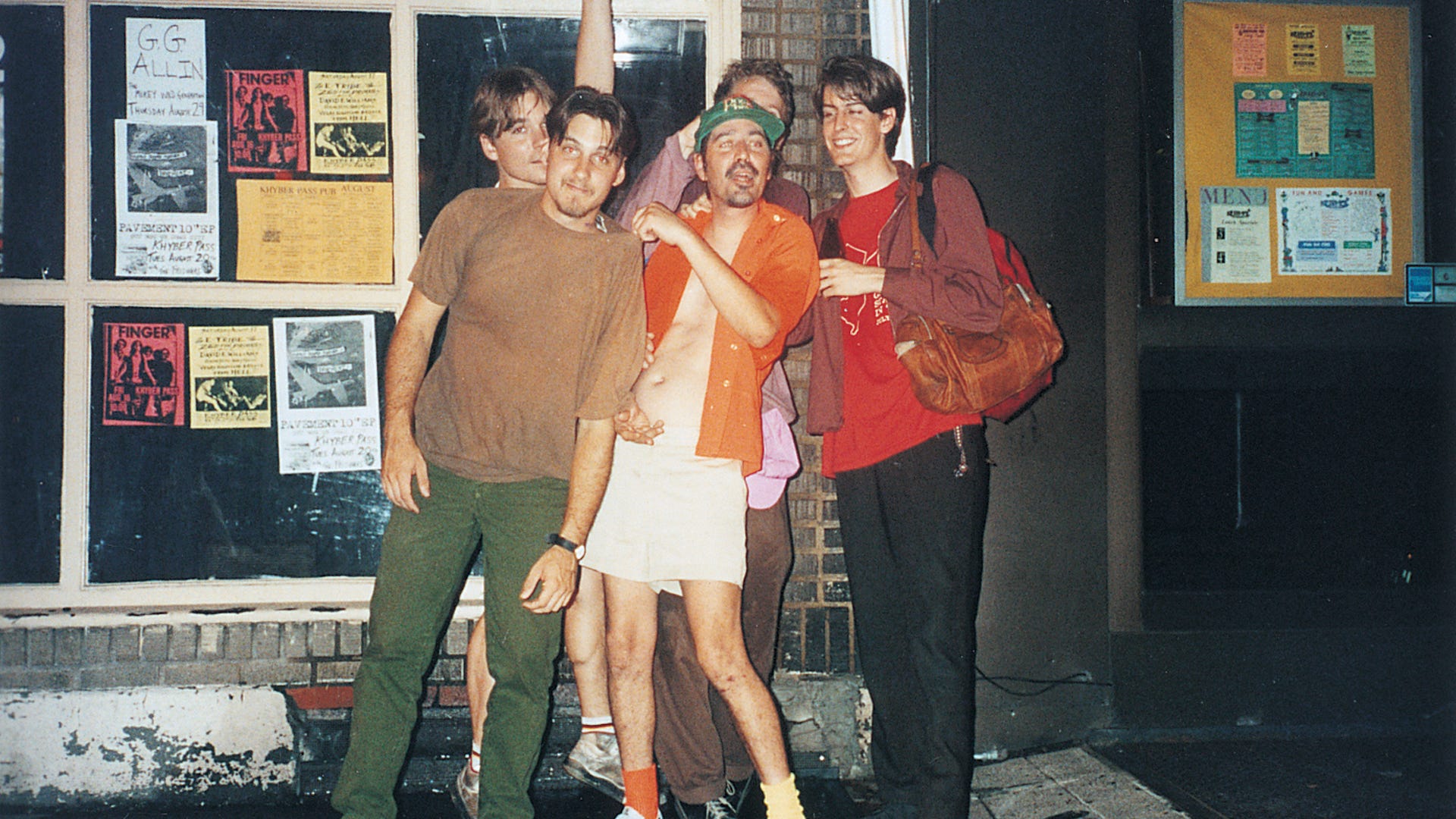
THE SCOTT KANNBERG INTERVIEW
So whose idea was it to put together these Secret History sets?
SK: Originally, we wanted [all of the 2000s-era reissues] to come out on vinyl. But when Matador did the Brighten the Corners one, it was like four records and it cost so much, so they were like, “no, we’re not doing that again.” So years went by, and I never thought we’d put that [bonus material] out on vinyl, but Matador just approached me and said there’s a lot of people talking about it and want that stuff, and now that vinyl’s come back again, we feel like it could be a really cool thing. I think Patrick at Matador came up with the idea of a vinyl series—collect ‘em all and get a special prize. I think all of the artwork is going to be similar and will tie it all together. Unfortunately, there’s not a lot of additional rare tracks to put on there; we’re just putting it out there so people can have it if they want to get it on vinyl. And if they’re happy with the CD compilations when they came out, maybe they won’t buy the vinyl. But people seem to like vinyl.
And for kids who only got into the band in the past 10 years—who probably don’t even own a CD player at this point—it’s a way to liberate these tracks from bonus-disc purgatory and bring them to a new audience…
SK: This guy Jesper [Eklow], he used to be the guy at Matador who did all the production. He’s in that band Endless Boogie now. But they’ve re-hired him to do all the packages, and he moved some of the songs around to breathe fresh life into it—they flow together a bit better than we originally did on the [2000s] reissues. I think the first song is “Sue Me Jack” and then “Greenlander”—those songs were not really recorded right at the same time, so with the CD compilations way back, when we first did that Slanted one, I tried to make sure all the songs were from same exact recording sessions. But on the vinyl thing, to make the songs fit better, some of the songs have been switched around, which is okay, I think.
Did you really get into the idea that you were building a “lost record” and had to give it distinct sequence and flow, so that it feels like less of a random odds ‘n’ sods assortment?
SK: Yeah… I think all of those songs, the way we recorded them all at that time, we really thought any of them could be on the record. Unfortunately, you have to pare it down to the 10 or 12 ones that sound the best together. Calling something a “B-side” or a “rarity,” it’s not really true. And not making the cut doesn’t mean they’re not good enough; they just didn’t fit with the other songs. That’s kind of why Wowee Zowee is out there, I guess—we just put everything together. [laughs]
The “lost album” presentation is consistent with the Pavement tradition—like the way the first EP, Slay Tracks, was presented as this mysterious fake compilation. With those early Pavement records, you get the sense you’re uncovering some rare artifact.
SK: We really tried to be mysterious. That’s what I love about music—I love it when you can look at something and be like, “wow, what’s this all about?” And the music takes you to another place, too, and you can’t really picture what these people look like—is it one guy, or a band making music in a garage? We didn’t try to be completely mysterious back then, it just kind of came out that way. That was the landscape. There were just fanzines around.
Are you the primary archivist in the band?
SK: Yeah, I saved everything. When we did the first reissues, there was a lot of going back, because the band had been broken up for a while, so that was more about going through the tracks and finding versions we hadn’t heard in a long time, and then going through boxes full of old interviews and pictures. I didn’t really do that for this [Secret History release], but it’s just kind of an extension of that. It’ll be interesting how each record kind of goes. For Terror Twilight, the last record, we never put anything out for that.
Is that a comment on how you felt about the record?
SK: [Laughs] No, no, no. That record was a great record—it was still a Pavement record. I still love it. [The reissue] never came out because at the time… we put it together, we have a version with everything on it, but Matador felt… I don’t know, maybe it was a time in the landscape when it wasn’t right to put it out. So I think we’re still planning to do that, but now with the vinyl series, I don’t even know if they’ll put a CD out, so I think it might just be vinyl. But that’s, like, a year away.
The Brixton show included in the Secret History set was obviously included on the Slanted and Enchanted reissue as well, and I first heard it as a bootleg in the ‘90s. Did you ever collect your own bootlegs back then?
SK: Yeah, I did. I would go into the record shops and see these bootlegs and, at first I’d be mad, and then I’d be like, “shit, I’ll just go buy it.” I’ve got a few of those. There weren’t a lot of bootlegs…
The two big ones I remember were Stray Slack and Stuff Up the Cracks…
SK: Yeah. There might be a few more out there. I think by that time, people started trading CDs, and then the digital stuff happened. We were lucky back then, because we went over to England a lot in the early days, and the BBC people liked us, or somebody at the label at that time was getting people to record us, and we did some Peel Sessions, so everything was recorded well. The Brixton show was a BBC recording. We wanted to put it out. The bootleg was somebody just recording it off the radio.
You can tell it came from a broadcast because the F-bombs were removed from “Box Elder.” That show feels like a special moment for the band. It’s the most punk rock Pavement ever sounded.
SK: It is. I think we were pretty good around that time. If you caught us for three or four shows, we could put three or four shows together pretty good. But then I think when [drummer] Gary [Young] started believing all the hype, things just started really going downhill [laughs]
Have you kept in touch with Gary?
SK: No, I haven’t. After the reunion shows we did with him, I moved to Australia and lived there for a few years, so I lost track of Gary. We didn’t really leave it too well at the end, because I was kind of upset with him about him still being drunk Gary. But I’ve heard he’s doing good. I have a friend who still knows him. He’s still living out in the country near Stockton probably, growing vegetables, and listening to Frank Zappa. But he was a big part of those early years. If it wasn’t for Gary, it would’ve been a completely different band—not only in recording all the stuff, which he did a great job at, he was a big source of entertainment for us! [laughs]
The great irony of the band is you mellowed out after the hippie left.
SK: Yeah right! We became more R.E.M., less Replacements
What kind of future do you think Pavement has from here on out?
SK: I don’t know. We did that reunion in 2010, and we all had a great time, and I think we all agreed that we’ll get back together one day and do some more touring. But I think it’s going to be based around our catalogue. I don’t think making a new record would ever be in the cards. But you never know. People want to hear it. I go to shows of old bands, and I don’t really want to hear new songs, I want to hear the hits! We’ve done a good job of keeping the catalogue interesting at least. There’s a few more really early rarities I’d like to release one day. The vaults are almost depleted at this point, but there are few things out there that are really great, like the very first radio session that we did in Davis, California that I wouldn’t mind getting out there, and then along the way, there’s probably some weird things we had done that pop up. Like, we were watching [an old set] on YouTube and I was like, “Wow, I totally forgot about that song.” I think there are songs out there that we’ve played live that have never been on a record. If we ever do a box set, that’s probably where it’ll come out on.
Are you tapped into message boards, or what would be the modern version of tape-trading culture?
SK: I’m not, but there are a few guys out there who I keep in contact with who know everything about Pavement, even more than I do!
ENCORES
As dedicated readers of stübermania (bless you) may have noticed, this is the third time a Stephen Malkmus interview has been featured in this newsletter; for those playing catch-up, here are the previous two.
Sadly, the first volume of Pavement’s Secret History series remains the only volume that’s been released to date. No official reason was ever given for the series’ discontinuation, but given Kannberg’s comments about vinyl-production costs above, perhaps it wasn’t financially sustainable in the long run. And when you consider all of Pavement’s activity in the 2020s—the reunion tour, the Terror Twilight box set, the Pavements movie, the ongoing “Harness Your Hopes” capitalization projects—the need for archive-preservation projects seems less pressing now that the band are so ever-present again. But all of the material that would’ve appeared in the Secret History series is available to stream on the deluxe editions of each of the band’s albums.
ICYMI: While the most recent Pavement reunion (like the 2010 one before it) didn’t yield a new Pavement album, the group did release its first new recording in 26 years via the Pavements soundtrack—a rehearsal-session cover of Jim Pepper’s hippie hymn “Witchitai-To”:
Just before Pavement hit the road in 2022, I spoke to Kannberg for Stereogum’s We’ve Got a File on You feature, where we talked about Pavement’s infamous 1994 appearance on The Tonight Show, recruiting Veruca Salt for the “Painted Soldiers” video, and surviving Mudpalooza.
This is a free newsletter, but if you really like what you see, please consider a donation via paid subscription, or visit my PWYC tip jar!